A strong classroom community is essential for children’s success. Before meaningful learning can take place, children need to feel safe, welcomed, and respected. One way to begin building this foundation is by intentionally creating opportunities for children to explore who they are, where they come from, and how they belong within the new classroom community.
Conversations about home life are a great starting point. When teachers acknowledge and build on the pieces children bring from home, it helps bridge the gap between school and family. The more familiar and aligned the experiences feel, the easier the transition becomes for young children as they navigate the big step of joining a school community.
Children also begin to understand that we are all part of many communities; families, neighborhoods, schools, and that these communities are made up of unique places and people. Exploring this concept can be as simple as talking together about familiar spaces; grocery stores, restaurants, libraries, parks, or places of worship. Invite children to vote, graph their ideas, share stories, and compare similarities and differences. Document their thoughts with pictures, quotes, and drawings, and display them in the classroom. This visible record not only honors children’s voices but also helps them feel a sense of ownership in the classroom community.
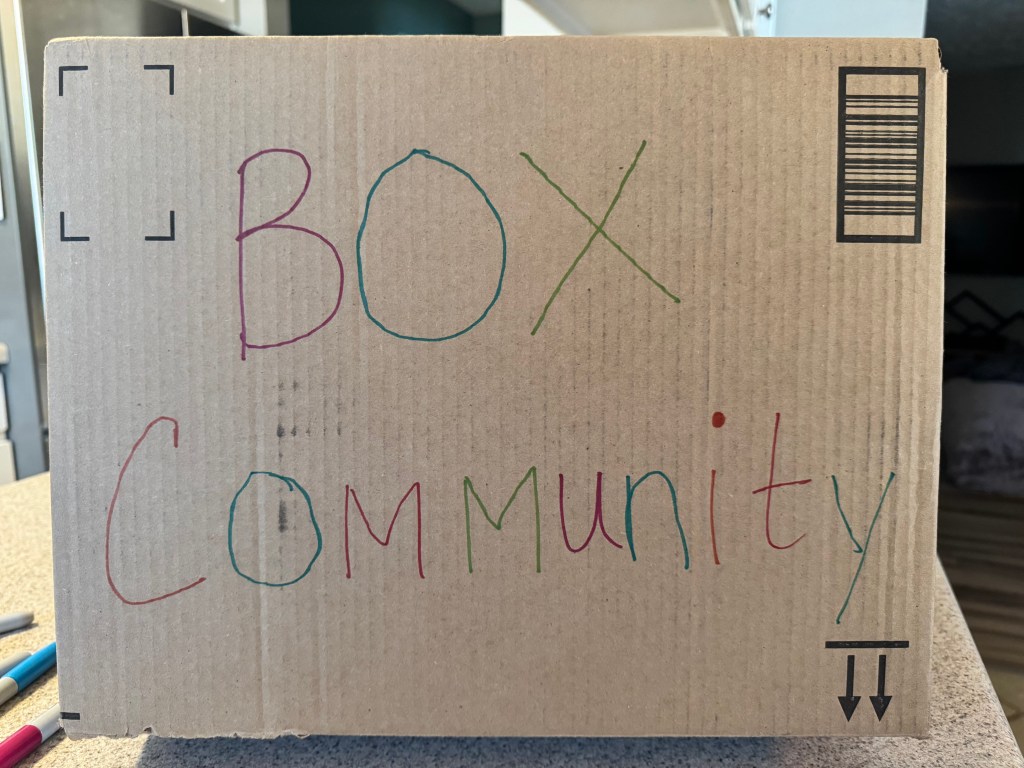
One engaging way to bring this learning to life is through a “Box City” project. Collect boxes of all shapes and sizes, and introduce them as the “building blocks” for a community. Provide materials for decorating and environmental print (signs, logos, labels; both familiar and new) to spark ideas. Then invite children to transform the boxes into the places they think a community needs: schools, libraries, grocery stores, apartment buildings, parks, even homes with windows, doors, and stairs. Encourage creativity and let children take the lead… there is no right or wrong way! There are no limits to what children can imagine!
Through this process, you’ll discover insights into children’s home lives, traditions, and perspectives. Just as importantly, children will see that while their experiences may differ, those differences are valuable. Together they learn what it means to participate in a shared community, to appreciate one another’s ways of living, and to recognize that diversity is not only real but beautiful.

 The Transforming Teacher